What is a Hotel-Museum?
Enrich your mind whilst you sleep,
and rest your spirit surrounded by the beauty of fine things.
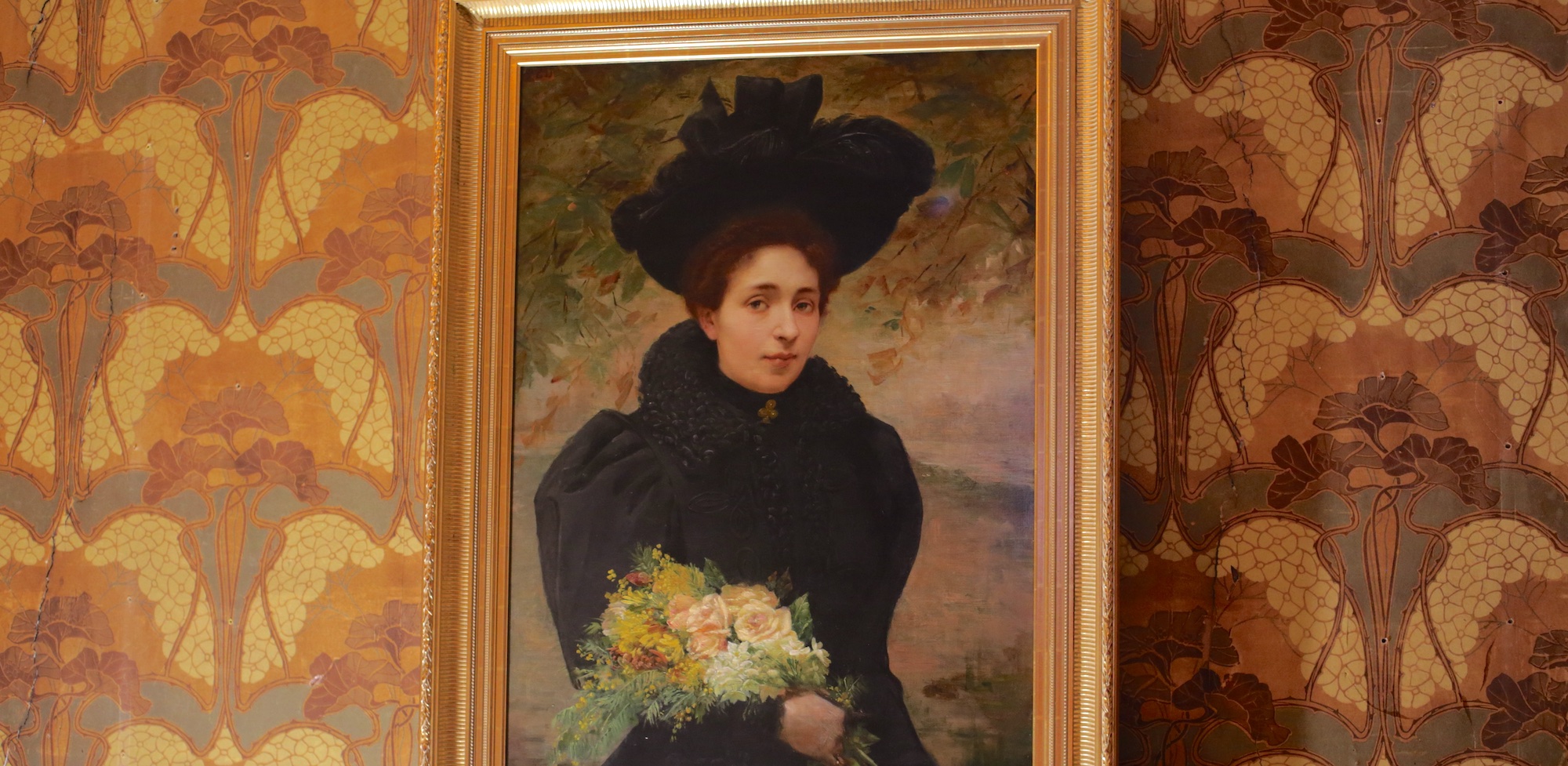
A Hotel-Museum is a place where you come to live, and notably to sleep, amidst furniture and objects of museum quality.
It is a museum where interaction is encouraged.
Here, you explore with your senses, including touch!
The concept of the Hotel-Museum was born out of a shared frustration: seeing magnificent collections preserved in traditional museums, yet completely stripped of their function and warmth. In our Hotel-Museum, we have meticulously curated objects that can still be used, allowing our guests to live alongside them for the duration of their stay.
Touch and understand.
Every object is accompanied by curatorial notes to shed light on its historical, artistic, or technical significance.
Admiration is a wonderful thing, but we appreciate much more what we truly understand. In your room and throughout the various spaces of the Villa, items from the Chauvin Collection are paired with scientific notes. These are exclusively accessible via QR Codes on the Grande-Maison private intranet. Available in French, English, Spanish, and German, these notes automatically display in the native language of your smartphone.
View a sample curatorial note.
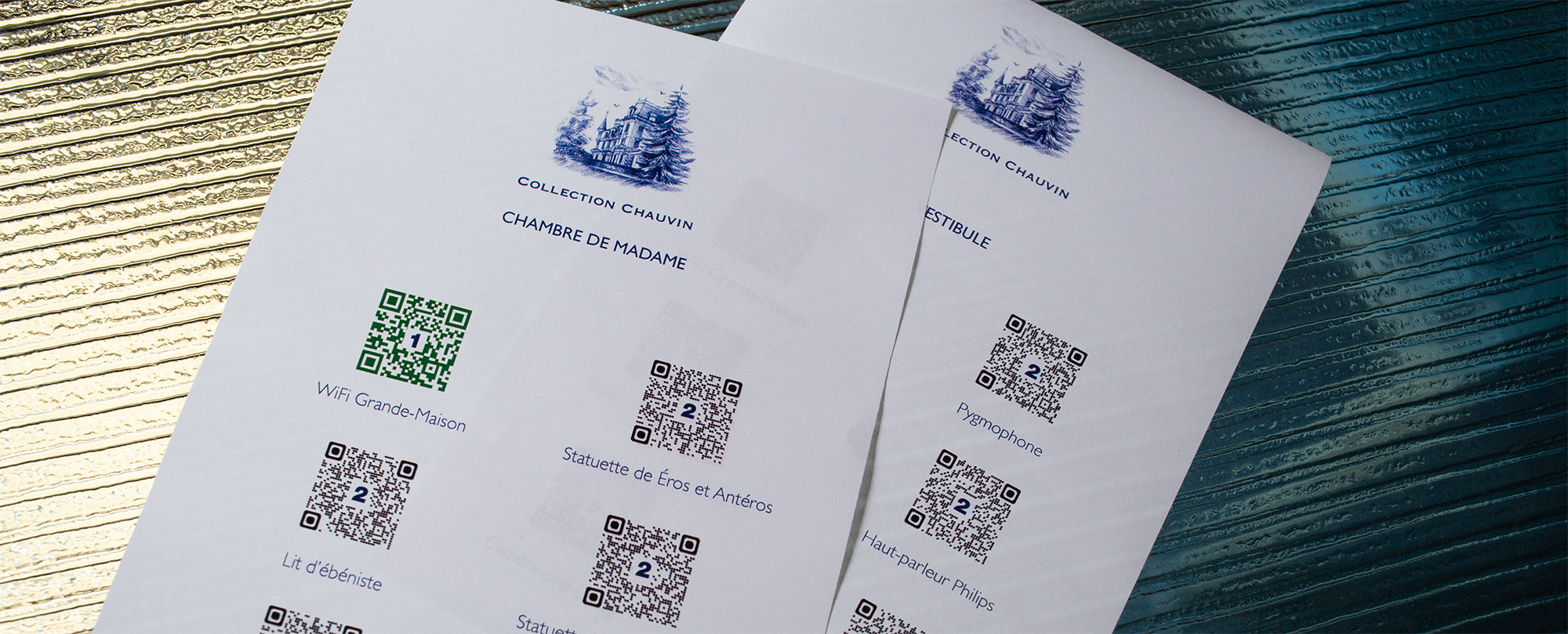
-1- Green QR Code to connect to the "Grande-Maison" Wi-Fi network and access general information.
-2- Blue QR Code to access the curatorial notes available in French, English, German, and Spanish.
-€- Red QR Code to browse the "Atelier Epitalon" and "mari & femme" boutique collections.
The Birth of the Concept
The term 'Hotel-Museum' appears to have been coined by 'Hôtel-Musée Première Nations', a hotel complex opened in Quebec in 2008 to celebrate the heritage of North American indigenous populations prior to the arrival of Europeans in the 17th century. The phrase was adopted in 2020 by Matthieu Chauvin when structuring the project to open 'Hôtel-Musée de la Villa Bagatelle' in Irigny, France, to the public. It was formally developed for the first time within a grant application submitted to the Auvergne-Rhône-Alpes region for the opening of an atypical hospitality property. Around the same time, the term was independently used by the 'Santa Maria la Nova' convent in Naples and by the 'Citadelle Vauban Hôtel-Musée', located in the fortress overlooking the harbour of Le Palais in Belle-Île-en-Mer.
The fact that the same idea blossomed concurrently in different corners of the world points perhaps to a collective desire to reconnect with historic roots and a refined art of living.
Description
As defined by Matthieu Chauvin, a Hotel-Museum is an accommodation where guests are invited to interact with historical objects and live their daily lives, for the duration of their stay, within a museum-quality environment.
This concept was the subject of a Master’s thesis in Museography in 2022 by Ninon Bouley and in 2025 by Louise Srtoretti, two students at the Jean Moulin Lyon 3 University, under the direction of François de Vergnette. Ninon Bouley conducted extensive research to define the concept precisely and carried out a study to map out public expectations regarding this novel hospitality offering. Louise Sartoretti worked on: The Immersive and Sensory Exhibitions, The Case of the Hotel-Museum of the Villa Bagatelle and its Application to Public Museums
The term 'Hotel-Museum' does not refer to a specific legal status or commercial structure; it can apply equally to a hotel, guest rooms, an igloo village, a campsite, or any other form of lodging, including mobile or itinerant concepts.
A Hotel-Museum is a place for leisure, relaxation, or business, where lodging is intrinsically tied to a high-level cultural and scientific offering. The core philosophy is to allow guest-visitors to enjoy, handle, and live with pieces that traditional museums restrict to sight alone. It implies an inherent commitment on the part of the host to share and pass on knowledge.
What Can One Expect in a Hotel-Museum?
The defining criteria of a Hotel-Museum include:
• A clearly defined historical focus: for example, the culture of North American indigenous populations, or French bourgeois domestic life in 1900.
• Buildings or a natural/urban environment that perfectly align with this focus, such as the Citadelle Vauban or Villa Bagatelle.
• Layouts, fixtures, fittings, and an authentic collection that are close to their original state or meticulously restored in accordance with the principles of the 1964 Venice Charter.
• A comprehensive set of curatorial notes and scientific explanations enabling guests to understand the significance of everything presented around them: the surroundings, the gardens, the architecture, or the objects themselves.
Three Highlights from the Collection
The Chauvin Collection gathers historical items around three core themes:
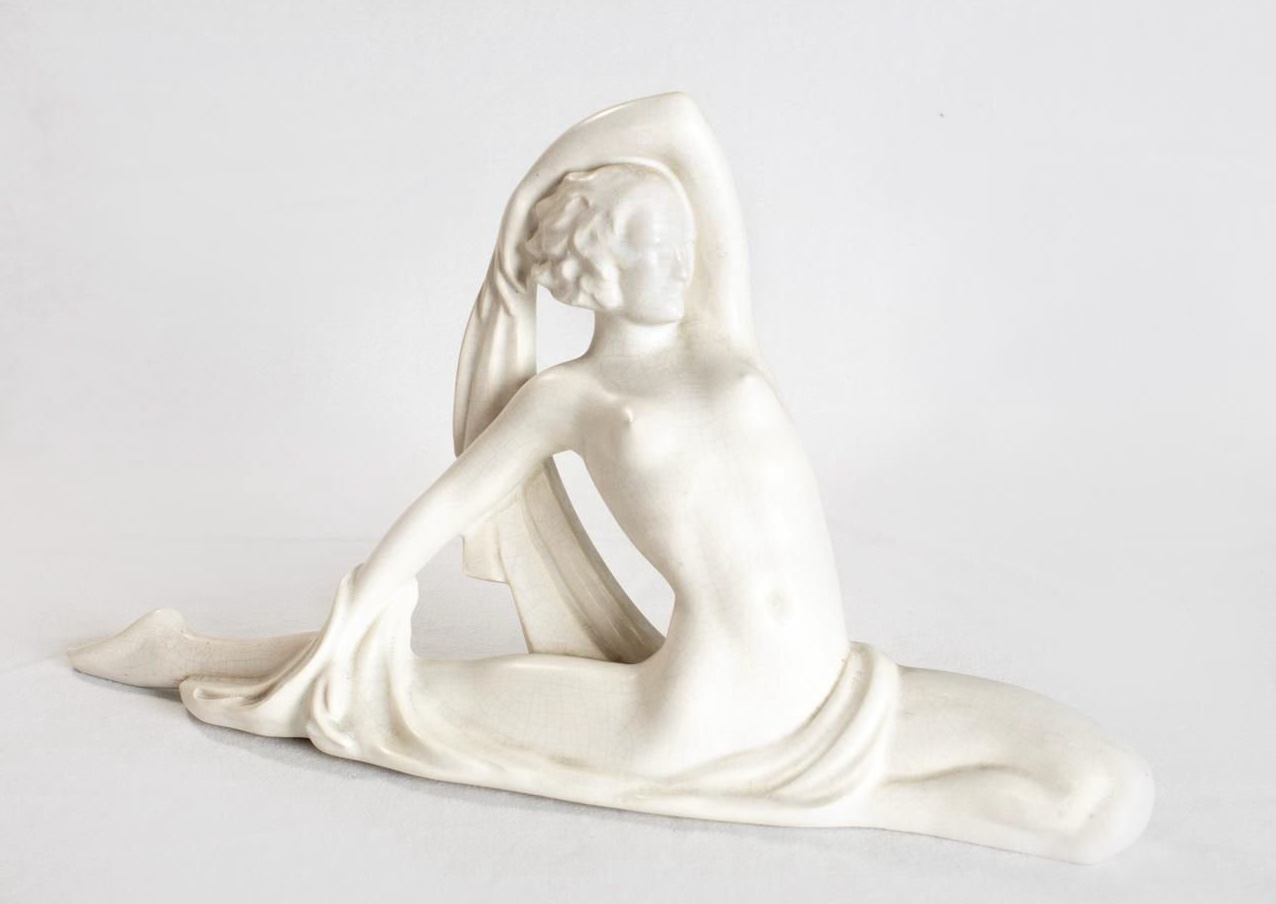
• Domestic life at the turn of the 20th century: furniture, decor, tableware, and fine objects,
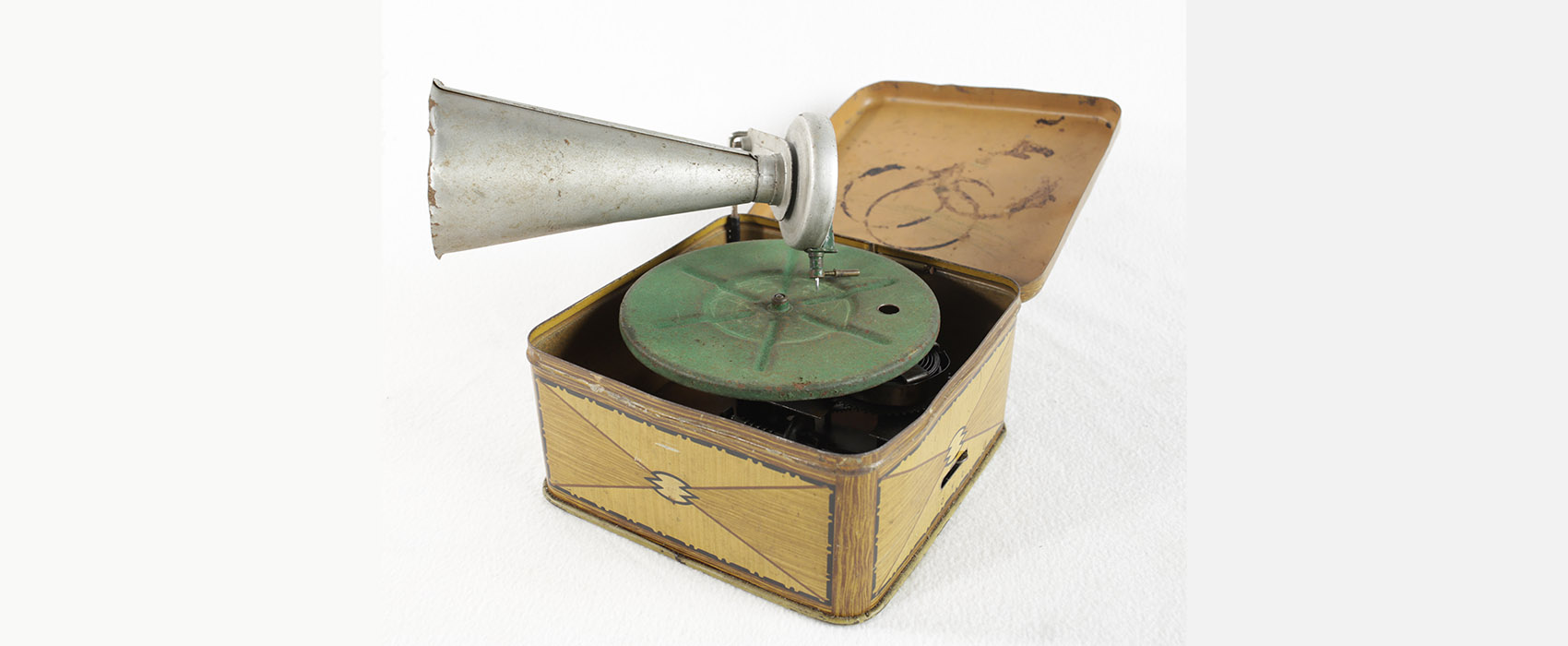
• The historical reproduction of images and sound,
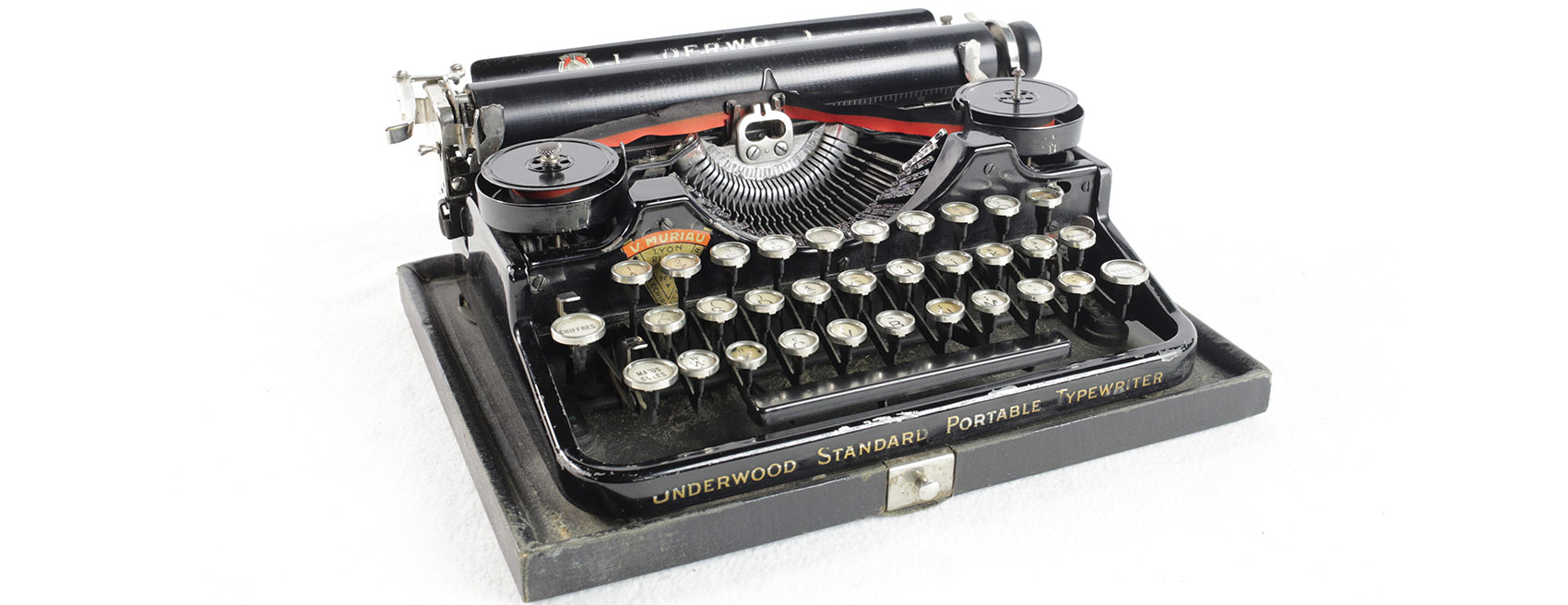
• Early family and office mechanics.
The vast majority of these items come from the treasures accumulated in family attics over four or five generations by ancestors who possessed both the luxury of space and a disinclination to throw things away.